

Technical support
Level 1 Support (Call Center Services)
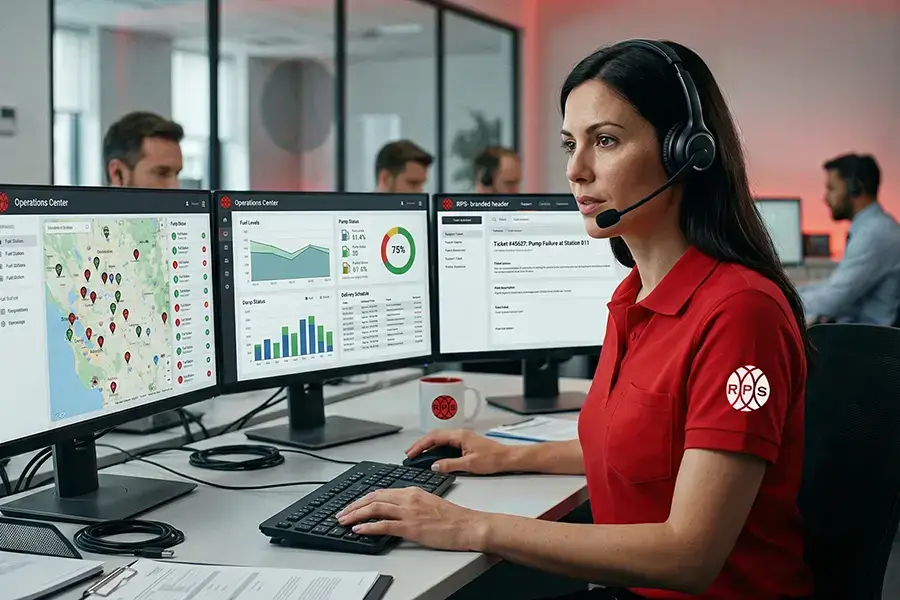
Level 1 Support acts as the first point of contact for incidents and service requests, handling initial issue intake and customer communication. It covers basic troubleshooting and first-level issue resolution, while ensuring all requests are properly logged through ticket creation, categorization, and prioritization to maintain structured and efficient support workflows.
Level 2 Support (On-Site / Field Support)
Level 2 Support addresses more complex issues that require deeper technical expertise and, in many cases, physical intervention on-site. This level involves troubleshooting problems that cannot be resolved remotely, including hardware-related issues or system configurations requiring direct access.
Level 2 teams work closely with field operations and service teams to ensure timely resolution, minimizing downtime through hands-on support and operational coordination.
Level 3 Support
(Advanced / Engineering Support)
Level 3 Support represents the highest level of technical expertise, primarily focused on software-related issues and advanced system problems. At this level, engineers perform in-depth analysis and resolve issues remotely by connecting directly to systems or stations. This includes root-cause analysis, bug fixes, system optimizations, and coordination with development teams when necessary. Level 3 ensures long-term solutions and continuous improvement of system performance.
Ticket Management & Reporting
Within our Technical Support services, all support requests are managed end-to-end through a structured Ticket Management system. Every request is logged, categorized, and prioritized based on criteria such as issue type, urgency, communication channel, and assigned service level (Level 1, Level 2, Level 3). This approach ensures standardized processes, improved response times, and full visibility across the support lifecycle.
With advanced reporting capabilities, all ticket data is transformed into meaningful and measurable insights. These reports enable organizations to monitor service performance, track operational efficiency, and ensure compliance with agreed service levels (SLAs).
Reporting capabilities include:
- Ticket volume, status tracking, and resolution times
- SLA compliance and performance metrics
- Distribution by priority, category, and communication channel
- Performance analysis across support levels (L1, L2, L3)
- Trend analysis and period-based comparisons
- Agent and team performance metrics
This enables organizations not only to manage their support operations effectively but also to make data-driven decisions, continuously improve processes, and enhance overall service quality.
Why Choose RPS?
Intelligent Solutions for Modern Operations
Continuous Research & Innovation
We invest in ongoing research to develop forward-thinking solutions that keep our customers ahead of industry challenges.
Flexibility & Out-of-the-Box Thinking
Our adaptable mindset allows us to design solutions beyond standard frameworks, tailored to unique operational requirements.
Proactive Problem-Solving Approach
We anticipate challenges early and act decisively to deliver effective, long-term solutions.
End-to-End R&D Capabilities
From hardware to software, our in-house R&D enables seamless integration and full control over solution quality.
Customized & Scalable Solutions
We design systems that adapt to each customer’s needs while remaining scalable for future growth.
Deep Industry Experience
Years of sector expertise enable us to fully understand customer expectations and deliver solutions that truly fit.